
Executive Summary
This report provides a comprehensive, practice-oriented guide for international importers sourcing laptop computers and desktop PCs from China. As the world’s largest electronics manufacturing hub, China accounts for approximately 90% of global laptop production and hosts the complete supply chain from component manufacturing to final assembly. This guide covers market landscape, supplier identification, pricing benchmarks, compliance requirements, logistics, quality control frameworks, and risk mitigation strategies — all structured for immediate procurement execution.
| Key Takeaways for Importers:China remains the dominant global PC manufacturing base with mature clusters in the Yangtze River Delta, Pearl River Delta, and Western China (Chongqing/Chengdu).MOQ ranges from 1 unit (ready-to-ship) to 500–1,000+ units for full-custom OEM builds; typical entry-level OEM starts at 50–100 units.Mandatory certifications vary by destination market: CE/RED/RoHS for EU, FCC/UL for USA, BIS for India, and CCC for China domestic sales.Standard payment terms: 30% T/T deposit + 70% balance before shipment; L/C recommended for first-time orders above $100,000.Pre-shipment inspection (PSI) by third-party agencies (SGS, BV, TÜV) is essential — 85% of quality defects are discoverable before container loading. |
1. Market Overview & China’s Position in Global PC Manufacturing
1.1 Global Market Context
China is the undisputed center of global personal computer manufacturing. Major global brands including Lenovo, HP, Dell, Apple, Acer, and ASUS rely heavily on Chinese Original Design Manufacturers (ODMs) and Original Equipment Manufacturers (OEMs) for both design and assembly. The top Taiwanese ODMs — Quanta Computer, Compal Electronics, Wistron, Inventec, and Pegatron — operate the majority of their production facilities in mainland China, particularly in Kunshan (near Shanghai), Chongqing, and Chengdu.
1.2 China Domestic Market Share (2025–2026)
According to Canalys and AMD industry reports, the China domestic PC market shows the following brand ranking by shipment volume:
| Brand | Market Share | Notes |
| Lenovo | ~40% | Global #1 for 10 consecutive years; 24.9% global share in 2025 |
| Huawei | ~11–13% | Fastest growing; ~16% YoY growth in Q4 2025 |
| HP | ~10% | Strong commercial/enterprise segment |
| Dell | ~7–8% | Enterprise and gaming focus |
| Honor | ~5–6% | Spin-off from Huawei; growing consumer segment |
| Xiaomi | ~4–5% | Value-oriented consumer and gaming laptops |
| Others | ~20% | Including ASUS, Acer, Apple, various domestic brands |
1.3 Export Destinations
China’s laptop and tablet exports are distributed globally, with the United States being the largest destination at approximately 33% of total exports (~85M units), followed by Hong Kong SAR (~30M units, largely re-export), the Netherlands (~19M units, EU distribution hub), and other European and Southeast Asian markets.
2. Major Manufacturing Clusters in China
China’s PC manufacturing is geographically concentrated in four major clusters, each with distinct specialization and cost profiles. Understanding these clusters helps target the right suppliers for your product category and volume requirements.
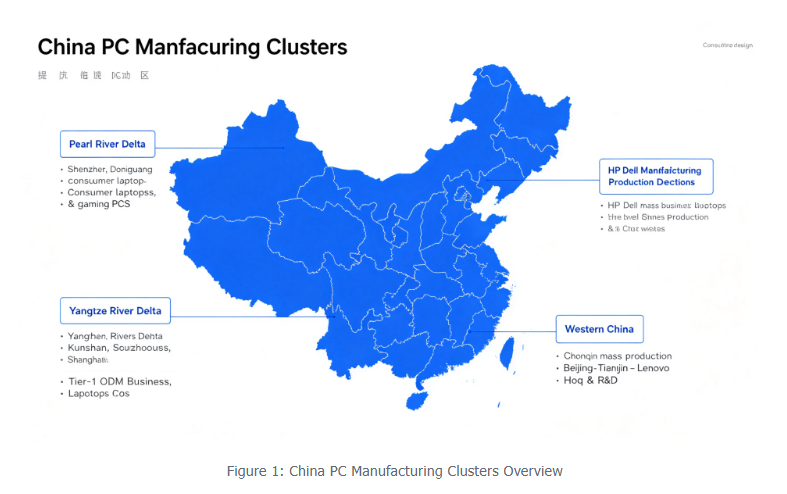
Figure 1: China PC Manufacturing Clusters Overview
2.1 Yangtze River Delta (Kunshan, Suzhou, Shanghai)
Core Cities: Kunshan, Suzhou, Nanjing, Shanghai
Specialization: Tier-1 ODM business laptops, ultra-thin notebooks, server systems, high-end gaming PCs
Key Players: Quanta Computer, Compal Electronics, Wistron, Inventec (all Taiwanese ODMs operating mainland factories)
Strengths: Highest quality standards, ISO-certified facilities, skilled workforce, excellent port connectivity via Shanghai, strong component supply ecosystem
Considerations: Higher labor and operational costs; MOQs typically higher (1,000+ units for custom builds)
2.2 Pearl River Delta (Shenzhen, Dongguan, Guangzhou)
Core Cities: Shenzhen (Longhua, Guangming, Bao’an districts), Dongguan, Guangzhou
Specialization: Consumer laptops, gaming laptops, all-in-one PCs, mini PCs, mid-tier OEM/ODM for startups and regional brands
Key Players: Hundreds of mid-tier contract manufacturers, Huaqin Technology, Longcheer Technology, Wingtech Technology
Strengths: Flexible MOQs (50–500 units), fast turnaround, strong component sourcing ecosystem (Huaqiangbei), proximity to Hong Kong for logistics
Considerations: Quality varies significantly between factories; rigorous supplier vetting is essential
2.3 Western China (Chongqing, Chengdu)
Core Cities: Chongqing (Liangjiang New Area), Chengdu (Hi-Tech Zone)
Specialization: High-volume mass production for major global brands (HP, Acer, Lenovo)
Key Players: HP/Quanta Chongqing facilities, Lenovo Chengdu, Foxconn Chongqing
Strengths: Lower labor and land costs, government incentives for inland manufacturing, Belt and Road rail connectivity to Europe
Considerations: Primarily serves large brand orders; difficult for small-to-medium importers to access directly
2.4 Beijing-Tianjin Region
Core Cities: Beijing, Tianjin, Hefei (Anhui)
Specialization: R&D headquarters, Lenovo main operations, government/commercial procurement
Strengths: Home to Lenovo global HQ; strong enterprise and government channel access
Considerations: More focused on domestic market and brand operations rather than contract manufacturing for foreign buyers
2.5 Cluster Comparison Matrix
| Factor | Yangtze Delta | Pearl Delta | Western China | Beijing Region |
| Price Level | High | Medium | Low-Medium | High |
| Quality Standard | Premium | Variable | High (brand lines) | Premium |
| Typical MOQ | 1,000+ units | 50–500 units | 5,000+ units | Brand-only |
| Lead Time | 45–60 days | 25–40 days | 45–75 days | N/A |
| Best For | Enterprise-grade, large volume | SME importers, custom builds | Major brand distribution | Domestic brand sourcing |
3. Supplier Landscape: Brands, ODMs, and OEMs
3.1 Tier-1 ODMs (Taiwanese Manufacturing Giants)
These are the world’s largest laptop designers and contract manufacturers. They design and build machines for HP, Dell, Lenovo, Apple, Acer, and ASUS. Direct engagement is typically only feasible for very large orders (10,000+ units per model).
| ODM Company | Main China Locations | Major Clients & Specialization |
| Quanta Computer | Shanghai, Chongqing | Apple MacBook, ThinkPad lines, HP business notebooks; #1 global laptop ODM |
| Compal Electronics | Kunshan, Chengdu | Dell (Latitude, Inspiron, Alienware), Lenovo consumer, Acer |
| Wistron | Kunshan, Chongqing | HP, Dell, Lenovo; expanding to Vietnam |
| Inventec | Shanghai, Chongqing | HP, gaming laptops, enterprise systems |
| Pegatron / Foxconn | Kunshan, Shenzhen | Apple, ASUS; broader EMS scope |
| Clevo (Blue Sky) | Suzhou | Gaming laptop ODM; supplies many boutique gaming brands |
3.2 Chinese Domestic ODM/OEM Players
These Chinese-headquartered ODMs serve both domestic brands and international clients, often with more flexible terms for mid-volume orders.
| Company | Profile & Target Buyers |
| Huaqin Technology | Leading Chinese ODM; serves Xiaomi, Honor, and international brands; strong in consumer laptops, tablets, and AIoT devices. MOQ typically 1,000+ units. |
| Longcheer Technology | Focus on smartphones and laptops; serves regional brands and telecom operators. |
| Wingtech Technology | Major ODM with semiconductor integration; serves Samsung, Xiaomi, and others. |
| Shenzhen Mid-Tier Manufacturers | Hundreds of factories in Shenzhen/Dongguan offering flexible OEM/ODM. MOQ from 50 units. Quality varies dramatically — vetting is critical. Examples: Shenzhen Junfirer, Shenzhen Pintrant, DJS Tech (verified via Alibaba/Made-in-China). |
3.3 Brand-Name Sourcing Options
If you intend to resell established brands rather than build private-label products, you can source through:
- Authorized Distributors: Lenovo, HP, and Dell have authorized distributor networks for bulk commercial orders. Generally higher pricing but guaranteed authenticity and warranty.
- Grey Market / Parallel Imports: Available through Shenzhen/Huaqiangbei channels. Lower pricing but no official warranty, higher counterfeit risk. Not recommended for legitimate import businesses.
- Refurbished / Used Equipment: Significant market for refurbished ThinkPads, Dell Latitudes, etc. MOQ as low as 1 unit. Verify grading standards (A/B/C grade).
4. Sourcing Channels & Supplier Identification
4.1 Online B2B Platforms
| Platform | Best For | MOQ Range | Risk Level |
| Alibaba.com | Broadest supplier base, Trade Assurance escrow, Gold Supplier verification | 1–500 units | Medium (use verified suppliers only) |
| Made-in-China.com | Factory-verified listings, focus on manufacturing enterprises | 10–500 units | Medium-Low |
| Global Sources | Premium verified suppliers, higher quality threshold | 100+ units | Low |
| 1688.com (Alibaba China) | Domestic Chinese wholesale prices; requires agent/forwarder for export | 1–100 units | High (no export documentation) |
| Practical Tip: Always use platform escrow protection (Alibaba Trade Assurance) for first orders. Never pay 100% upfront to an unverified supplier. Gold Supplier status alone is not sufficient verification — request factory audit reports and client references. |
4.2 Trade Shows & Physical Sourcing
- Canton Fair (Guangzhou): China’s largest import/export fair, held April and October. Phase 1 features electronics. Excellent for meeting face-to-face and comparing multiple suppliers.
- Computex (Taipei): Premier PC industry show (May/June). Most major ODMs exhibit here. Best for higher-volume, brand-grade sourcing.
- CES Asia / ITE Shenzhen: Regional electronics shows for consumer tech.
- Factory Visits: Essential for orders above $50,000. Schedule 2–3 factory visits in the same region (Shenzhen/Dongguan or Kunshan/Suzhou) to maximize trip efficiency.
4.3 Sourcing Agents & Third-Party Services
For importers new to China or without local staff, sourcing agents provide valuable local expertise:
- Commission-based agents: Typically charge 3–8% of order value. Handle supplier identification, negotiation, QC coordination, and logistics.
- Buying offices: Larger firms with structured teams. Better for ongoing procurement programs.
- Freight forwarders with sourcing support: Many forwarders offer basic supplier introduction as a value-added service.
5. Pricing Structure & MOQ Requirements
5.1 Laptop Price Benchmarks (FOB China, 2025–2026)
| Product Tier | Typical Configuration | FOB Unit Price | Typical MOQ |
| Entry-Level / Education | 14″ HD, Intel Celeron/N100, 4–8GB RAM, 128–256GB SSD | $85 – $150 | 50–100 units |
| Mainstream Business | 15.6″ FHD, Core i3/i5 12th/13th gen, 8–16GB RAM, 256–512GB SSD | $260 – $520 | 50–200 units |
| Premium Business | 14″ FHD/2K, Core i5/i7 13th/14th gen, 16GB RAM, 512GB SSD, metal body | $520 – $850 | 100–500 units |
| Gaming Laptop | 15.6–16″ 144Hz, Core i7/i9, RTX 4050/4060, 16GB RAM, 1TB SSD | $820 – $1,580 | 50–200 units |
| Refurbished (Grade A) | ThinkPad T-series, Dell Latitude, i5 7th–10th gen, 8GB RAM, 256GB SSD | $165 – $350 | 1–10 units |
5.2 Desktop PC Price Benchmarks (FOB China)
| Product Tier | Typical Configuration | FOB Unit Price | Typical MOQ |
| Basic Office Tower | Core i3, 8GB RAM, 256GB SSD, no OS or FreeDOS | $180 – $280 | 20–100 units |
| Business SFF / AIO | Core i5, 16GB RAM, 512GB SSD, 21.5–24″ display (AIO) | $350 – $600 | 50–200 units |
| Gaming Desktop | Core i5/i7, RTX 3060/4060, 16GB RAM, 1TB SSD | $650 – $1,200 | 20–100 units |
| Mini PC | N100 / Core i5, 8–16GB RAM, 256–512GB SSD | $120 – $350 | 50–200 units |
5.3 BOM Cost Breakdown
Understanding the Bill of Materials (BOM) cost structure helps you evaluate supplier quotes and negotiate effectively. A typical mainstream laptop BOM breaks down as follows:
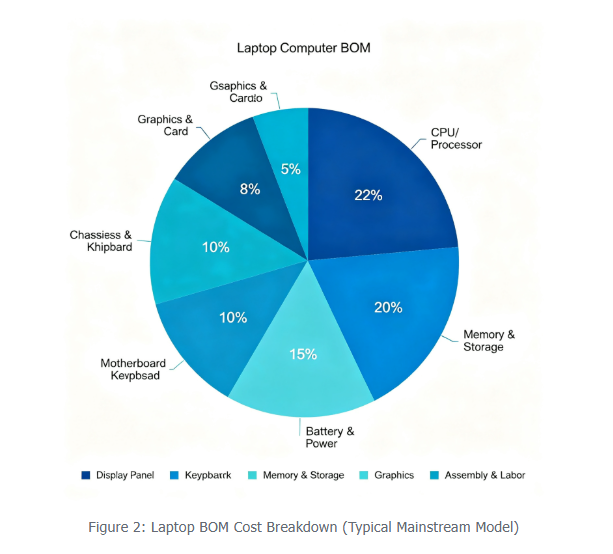
Figure 2: Laptop BOM Cost Breakdown (Typical Mainstream Model)
5.4 MOQ Realities
- Ready-to-Ship (RTS) listings: MOQ = 1 unit, but these are standard catalog products with zero customization. Pricing is higher per unit.
- Semi-custom (existing platform, modified specs): MOQ = 50–100 units per configuration. You can adjust RAM, storage, and preloaded OS on an existing chassis design.
- Full OEM (custom chassis, logo, packaging): MOQ = 500–1,000+ units per model. Includes tooling costs ($5,000–$20,000 for new mold).
- Important: MOQ applies to identical configurations. Mixing CPU models or colors across a single order usually resets the MOQ for each variant.
6. Compliance & Certification Requirements
Certification is the single most critical compliance factor when importing electronics. Different destination markets have different mandatory requirements. Missing or invalid certifications will result in customs seizure, fines, or forced re-export.
6.1 HS Code Classification
Correct HS code classification is the foundation of import compliance. Standard codes under the Harmonized System:
| Product | HS Code (6-digit) | Notes |
| Laptop computers | 8471.30 | Portable automatic data processing machines (weight ≤ 10kg) |
| Desktop computers (tower) | 8471.41 | Digital processing units comprising CPU and memory |
| All-in-One PCs | 8471.41 or 8471.30 | Classification depends on form factor; verify with local customs |
| Computer monitors | 8528.52 | Color monitors with LCD/LED panels |
| Computer parts & accessories | 8473.30 | Keyboards, mice, docking stations, adapters |
| Critical Note: Always validate HS classification with your local customs authority or a licensed customs broker. Duties vary significantly by country — for example, India charges 0% basic customs duty on laptops but applies 18% IGST; EU applies 0% duty for most laptops under 8471.30 but 20–25% VAT; USA applies Section 301 tariffs on certain China-origin electronics. Misclassification is the #1 cause of customs delays and unexpected costs. |
6.2 European Union (EU/EEA) Requirements
| Certification | Details |
| CE Marking | Mandatory. Covers LVD (Low Voltage Directive 2014/35/EU) and EMC (Electromagnetic Compatibility 2014/30/EU). Requires technical documentation file and EU Authorized Representative. |
| RED (Radio Equipment Directive) | Mandatory for all devices with Wi-Fi, Bluetooth, or cellular. 2014/53/EU. Requires notified body assessment for radio modules. |
| RoHS 2 | Restriction of Hazardous Substances (2011/65/EU). Limits lead, mercury, cadmium, etc. Must have RoHS test report and declaration. |
| REACH / SCIP | Registration, Evaluation, Authorization of Chemicals. SVHC (Substances of Very High Concern) declaration required. SCIP database notification for articles containing SVHCs. |
| WEEE | Waste Electrical and Electronic Equipment. Must register with national authority and affix WEEE symbol. Producer responsibility applies. |
| Battery Regulation | EU Battery Regulation (2023/1542). Battery passport, carbon footprint, and recyclability requirements phasing in 2026–2028. |
6.3 United States Requirements
| Certification | Details |
| FCC Certification | Mandatory for all devices with radio transmitters (Wi-Fi, Bluetooth). FCC ID must be registered and labeled on device. Verify at FCC OET database. |
| UL / ETL Listing | Not legally mandatory at federal level, but required by most major retailers and commercial buyers. OSHA NRTL (Nationally Recognized Testing Laboratory) listing. |
| California Prop 65 | Warning label requirement if product contains listed chemicals above threshold levels. Applies to all sales into California. |
| Section 301 Tariffs | Additional tariffs apply to many China-origin electronics. Verify current HTSUS codes and exclusion status with a customs broker before ordering. |
| Energy Star | Voluntary but expected for commercial/government procurement. Many enterprise buyers require Energy Star certified models. |
6.4 Other Major Markets
- India: BIS (Bureau of Indian Standards) certification is compulsory for laptops. 18% IGST at import (claimable as ITC). DGFT import authorization may be required for finished units.
- UK: UKCA marking (post-Brexit replacement for CE). CE still accepted temporarily but transition deadlines apply.
- Australia / New Zealand: RCM (Regulatory Compliance Mark) covering EMC and electrical safety.
- Japan: PSE Mark (electrical safety) + TELEC / Giteki for radio devices.
- Latin America (Mexico, Brazil): NOM (Mexico) / ANATEL (Brazil) certifications required. Brazil has especially high import duties on electronics.
- Middle East / GCC: SASO / GSO certification for Gulf Cooperation Council countries.
6.5 Battery Shipping Requirements
Laptops contain lithium-ion batteries, which are classified as dangerous goods for transport:
- UN38.3: Mandatory test standard for lithium batteries. All battery packs must have UN38.3 test reports.
- MSDS / SDS: Safety Data Sheet required for transport documentation.
- IATA / IMDG: Air and sea freight have specific packaging, labeling, and documentation requirements. PI967 Section II is the standard provision for laptops with batteries installed.
- Air freight restrictions: Lithium battery cargo may be restricted on passenger aircraft. Most laptop shipments go by sea or dedicated cargo freighters.
7. Logistics, Shipping & Incoterms
7.1 Common Incoterms for PC Sourcing
| Incoterm | Seller Responsibility | Buyer Responsibility | Risk Level |
| EXW | Make goods available at factory | Everything: pickup, export clearance, freight, insurance, import clearance | High |
| FOB | Deliver to ship at Chinese port, clear export | Ocean freight, insurance, import clearance, destination delivery | Medium |
| CIF | FOB + ocean freight + insurance to destination port | Import clearance, duties, inland delivery | Medium |
| DAP | Deliver to buyer’s location (no duties) | Import clearance, duties, taxes | Low-Medium |
| DDP | Deliver duty-paid to buyer’s door | Receive goods only | Lowest |
| Recommendation for New Importers: Start with FOB terms. This gives you control over freight costs and carrier selection while the supplier handles Chinese export clearance. Avoid EXW for first orders — you’ll need a Chinese freight forwarder to handle export formalities. DDP sounds convenient but often hides inflated duty calculations. |
7.2 Shipping Modes & Transit Times
| Shipping Mode | Transit Time | Cost per kg | Best For |
| Express (DHL/FedEx/UPS) | 3–7 days door-to-door | $5 – $12 | Samples, small orders under 100kg, urgent reorders |
| Air Freight | 7–14 days | $3 – $7 | Medium orders (100–500kg), time-sensitive shipments |
| Sea Freight (FCL) | 25–40 days (US West Coast 12–18 days) | $0.50 – $1.50 | Full container orders, cost-optimized bulk shipping |
| Sea Freight (LCL) | 30–50 days | $1 – $3 | Partial container loads (1–10 CBM) |
| Rail (China-Europe) | 14–21 days | $1.50 – $3 | EU destinations, faster than sea, cheaper than air |
7.3 Key Ports and Airports
- Sea Ports: Shenzhen (Yantian, Shekou), Shanghai, Ningbo-Zhoushan, Guangzhou, Qingdao
- Airports: Hong Kong (HKG — preferred for high-value electronics), Shanghai Pudong (PVG), Shenzhen (SZX), Guangzhou (CAN)
- Hong Kong Routing: Many Shenzhen factories route air freight through Hong Kong to take advantage of its free port status and more frequent cargo flights. This adds 1–2 days of cross-border trucking.
7.4 Required Shipping Documents
- Commercial Invoice (with HS codes, unit values, country of origin, Incoterms)
- Packing List (detailed per carton: quantity, weight, dimensions)
- Bill of Lading (sea) or Air Waybill (air)
- Certificate of Origin (Form A / Form F / Form E for preferential tariff treatment)
- MSDS for lithium batteries
- Certification copies (CE, FCC, RoHS, etc.)
- Insurance Certificate (if CIF/CIP terms)
8. Payment Terms & Financial Risk Management
8.1 Common Payment Methods
| Method | How It Works | Buyer Risk | Typical Usage |
| T/T (Telegraphic Transfer) | Bank wire transfer. Standard: 30% deposit before production, 70% balance before shipment. | Medium (deposit at risk) | Most common for established supplier relationships |
| L/C (Letter of Credit) | Bank guarantee of payment upon presentation of compliant shipping documents. Governed by UCP 600. | Low | First-time orders, high-value orders ($100k+), new suppliers |
| D/P (Documents against Payment) | Documents released by bank only after buyer pays. Less secure than L/C. | Medium-Low | Mid-sized orders with semi-established suppliers |
| Alibaba Trade Assurance | Escrow service through Alibaba. Payment released after goods are received and inspected. | Low | Alibaba platform orders, first-time small orders |
| PayPal / Credit Card | Fast but high fees (3–5%). Chargeback protection for buyer. | Lowest | Samples only, orders under $5,000 |
| O/A (Open Account) | Payment 30–90 days after delivery. Supplier finances everything. | Very Low | Only with long-term trusted suppliers |
8.2 Standard Payment Structure
The industry standard for OEM/ODM orders in China is the 30/70 T/T structure:
- 30% Deposit — Paid upon order confirmation (PI signing). Supplier uses this to purchase raw materials and commence production.
- 70% Balance — Paid before shipment, typically after pre-shipment inspection and receipt of copy of Bill of Lading.
For first-time orders, consider negotiating 20/60/20 with 20% held until after delivery and inspection, though most factories will resist this. Alternatively, use an L/C to shift payment risk to your bank.
8.3 Payment Security Best Practices
- Always pay to the supplier’s official company bank account (对公账户), never to personal accounts.
- Verify the bank account name matches the business license name exactly.
- Be wary of “our bank account changed” emails — always verify by phone with a known contact.
- Never pay 100% upfront unless the order is trivial (under $1,000).
- For orders over $50,000 with new suppliers, insist on at least a portion via L/C.
- Consider trade credit insurance for large ongoing programs.
9. Quality Control & Factory Audit Framework
Quality control is not optional when sourcing electronics from China. A rigorous multi-stage QC program prevents costly post-shipment defects and warranty claims. According to Alibaba Trade Index data, 85% of quality defects in China imports are discoverable during factory audits or pre-shipment inspections.
9.1 Four-Stage Quality Control Process
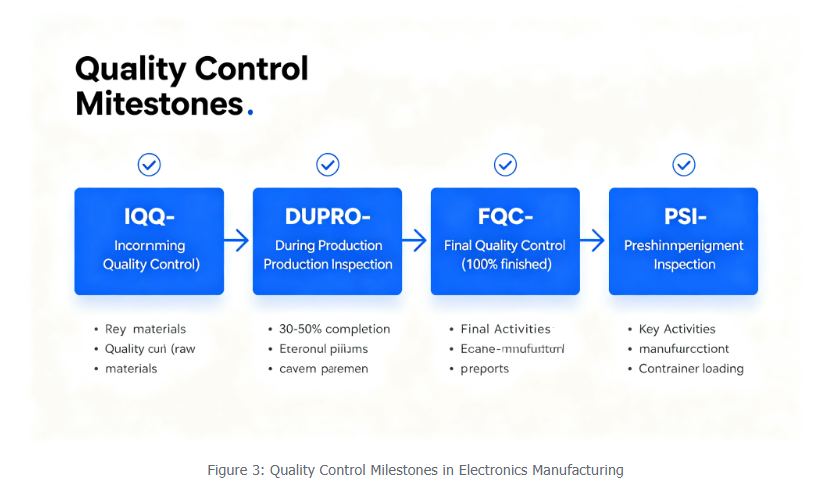
Figure 3: Quality Control Milestones in Electronics Manufacturing
Stage 1: IQC — Incoming Quality Control
Timing: Before production starts
What to verify:
- Raw materials and components match specifications (CPU model, memory brand, display panel grade)
- Battery cells are from approved suppliers with valid UN38.3 reports
- PCB and key components are genuine, not counterfeit or refurbished
- Material inspection reports from supplier’s incoming QC
Stage 2: DUPRO — During Production Inspection
Timing: When 20–50% of production is complete
What to verify:
- Assembly process follows specified procedures
- Defect rate tracking (target: <2% for electronics assembly)
- First-off articles (FAI) match golden sample
- Workmanship quality (soldering, screw torque, cable routing)
- Production on schedule per agreed timeline
Stage 3: FQC — Final Quality Control (100% Finished)
Timing: After all units are assembled and tested, before packaging
What to verify:
- Functional testing: boot test, Wi-Fi/Bluetooth, ports, keyboard, display, battery charging
- Cosmetic inspection: scratches, dead pixels, alignment issues
- BIOS/firmware version matches specification
- Preloaded OS and software configuration correct
- Stress test / burn-in test results (minimum 2–4 hours)
Stage 4: PSI — Pre-Shipment Inspection
Timing: After packaging, before container loading
What to verify:
- AQL Level II sampling (standard for consumer electronics)
- Packaging quality: carton strength, foam cushioning, anti-static bags
- Shipping marks, labels, and barcodes correct
- Quantity matches purchase order
- Accessories complete (charger, cable, manual, warranty card)
- Container loading supervision (optional but recommended for FCL)
9.2 Third-Party Inspection Companies
Use independent third-party inspection agencies for objective quality verification. Major players operating in China:
- SGS — Largest globally, comprehensive services, ~$250–400/man-day
- Bureau Veritas (BV) — Major global player, strong in consumer goods
- TÜV Rheinland / TÜV SÜD — German firms, strong certification + inspection
- Intertek — UK-based, broad electronics expertise
- HQTS / Asia Inspection — Mid-tier, good value for standard inspections
Typical inspection cost: $200–$500 per man-day. A standard PSI takes 1 man-day. Factory audits take 1–2 man-days. This is the single best investment you can make to reduce sourcing risk.
9.3 Factory Audit Checklist
A factory audit (also called supplier verification) should be conducted before placing your first significant order. Key areas to assess:
Legal & Business Verification
- Valid business license with matching registered name and address
- Registered capital (avoid factories under RMB 1M for electronics)
- Import/export license (can they export directly?)
- ISO 9001 quality management certification
- ISO 14001 environmental certification (for EU/US buyers)
Production Capability
- Factory floor area and number of production lines
- Monthly production capacity (units/month)
- Number of employees (engineering team size is critical)
- Equipment age and condition (SMT machines, test equipment)
- Current order backlog — can they actually deliver on time?
Quality System
- Incoming QC procedures and records
- In-process QC checkpoints
- Final testing procedures (functional test, burn-in, drop test)
- Defect tracking and corrective action system
- Calibration records for test equipment
Supply Chain & Components
- Key component suppliers (CPU, memory, display, battery) — are they authorized distributors?
- Component traceability system
- Battery supplier has UN38.3 and IEC 62133 certifications
- Risk of counterfeit components (especially memory and SSDs)
10. Common Pitfalls & Risk Management
10.1 Top 10 Risks for PC Importers
| # | Risk | Mitigation Strategy |
| 1 | Counterfeit / Refurbished Components | Specify brand-name components in PO; verify component lot numbers; use IQC inspection; avoid suspiciously low quotes. |
| 2 | Sample vs. Production Quality Gap | Golden sample signed and sealed by both parties; DUPRO inspection at 30% production; AQL sampling PSI. |
| 3 | Invalid / Fake Certifications | Verify FCC IDs in FCC OET database; verify CE via NANDO; request full test reports (not just certificate images); confirm model numbers match. |
| 4 | Payment Fraud / Scams | Verify bank account matches business license; never pay personal accounts; use T/T to company accounts only; beware “account changed” emails. |
| 5 | Hidden Material Substitutions | Detailed BOM in contract; DUPRO inspections to check components; specify that any substitution requires written approval. |
| 6 | Shipping Damage | Require anti-static packaging, foam cushioning, corner protectors; specify carton drop test standard; insure cargo; container loading supervision. |
| 7 | Customs Clearance Delays | Accurate HS classification; complete documentation set; pre-clear with customs broker; verify certifications recognized by destination country. |
| 8 | Production Delays | Realistic lead times in contract; milestone payments; regular production updates; penalty clause for late delivery (if negotiable). |
| 9 | Intellectual Property Issues | |
| 10 | Post-Sales / Warranty Problems | Define warranty terms in contract (1–3 years standard); negotiate spare parts buffer (2–5% of order quantity); clarify RMA process and who pays return shipping. |
10.2 Red Flags in Supplier Communication
- Prices 30%+ below market average — “if it seems too good to be true, it is”
- Refusal to provide factory address or video tour
- Insistence on 100% upfront payment or personal bank accounts
- Certificate images with blurry text or mismatched model numbers
- Company registered less than 6 months ago with no transaction history
- Unwillingness to accept third-party inspection
- Grammatically perfect English but vague technical answers (possible trading company posing as factory)
10.3 Trading Company vs. Direct Factory
Many “suppliers” on B2B platforms are actually trading companies (middlemen) that don’t own factories. This is not always bad — good trading companies add value through quality control, consolidation, and communication. However, you should know which you’re dealing with:
- How to spot a trading company: Wide product range across unrelated categories; vague about factory location; cannot arrange factory visits; prices slightly higher than direct factories.
- When a trading company is acceptable: Small order volumes (below factory MOQ); need to consolidate multiple product types; limited Chinese language capability; want single point of contact for QC and logistics.
- When to go direct to factory: Large volume orders (500+ units); need custom design/OEM; long-term ongoing program; cost optimization is top priority.
11. Step-by-Step Procurement Action Plan
This actionable 12-step roadmap guides you from initial market research to final delivery and post-sales setup. Follow this sequence for your first procurement project to minimize risk and establish a reliable supply base.
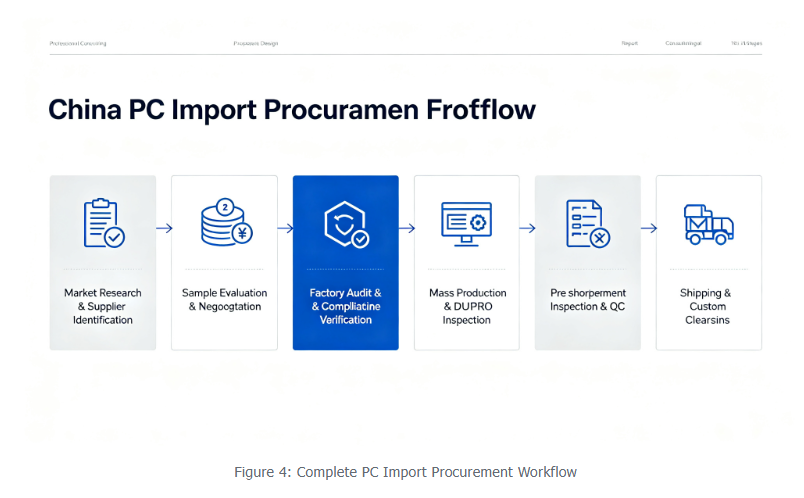
Figure 4: Complete PC Import Procurement Workflow
Phase 1: Preparation & Research (Weeks 1–2)
Step 1: Define Product Specifications & Requirements
- Document exact technical specifications: CPU model, RAM type/size, storage, display size/resolution, OS, ports, battery capacity
- Determine target market and required certifications (CE/FCC/RoHS/etc.)
- Set target price range and order quantity
- Define packaging requirements (retail box, neutral brown box, custom branding)
- Create a detailed specification sheet to send to all suppliers (ensures comparable quotes)
Step 2: Market Research & Supplier Longlisting
- Search Alibaba.com, Made-in-China.com, and Global Sources using your exact specs
- Filter for Verified Suppliers / Gold Suppliers with 3+ years history
- Identify 8–12 potential suppliers across Shenzhen/Dongguan and Kunshan/Suzhou regions
- Check supplier transaction history and dispute records on the platform
- Note which suppliers already hold certifications for your target market
Phase 2: Supplier Evaluation (Weeks 3–5)
Step 3: Send RFQ (Request for Quotation)
- Send your detailed spec sheet to all longlisted suppliers
- Request: FOB unit price, MOQ, lead time, payment terms, sample cost, certification status
- Ask for factory audit reports, existing client references, and company brochure
- Set a deadline for responses (typically 3–5 business days)
Step 4: Evaluate Quotes & Shortlist 3–5 Suppliers
- Compare quotes on total landed cost, not just unit price
- Eliminate outliers (too high or suspiciously low)
- Assess communication quality — response time, technical depth, English proficiency
- Verify certifications match your destination market requirements
- Select 3–5 suppliers for sample ordering
Step 5: Order & Evaluate Samples
- Order 1–2 samples from each shortlisted supplier (expect to pay sample fee + shipping, often refundable on bulk order)
- Conduct thorough testing: performance, build quality, display, battery life, thermal performance
- Compare against your specification sheet — note any deviations
- Document quality differences between suppliers photographically
- Select 1–2 finalists based on sample quality, price, and communication
Step 6: Factory Audit (for orders > $20,000)
- Hire a third-party inspection company to conduct an on-site factory audit
- Verify production capacity, quality systems, and working conditions
- Request audit report with photos and scoring
- Address any major non-conformities before placing order
- Alternative: conduct video factory tour via video call if budget is very tight
Phase 3: Order Execution (Weeks 6–12)
Step 7: Negotiate & Sign Purchase Contract
- Negotiate final price, MOQ, lead time, payment terms, and warranty
- Sign formal purchase agreement / proforma invoice with all terms documented
- Include: detailed specs, quality standards, delivery date, penalty for delay, defect rate acceptance, IP terms
- Attach golden sample specification as contract appendix
- Arrange deposit payment (typically 30% T/T)
Step 8: Production Monitoring & DUPRO
- Request weekly production updates with photos
- Schedule DUPRO inspection at 30–40% production completion
- Address any quality issues immediately — corrections are cheaper during production
- Verify component brands match agreed BOM
- Track production timeline against agreed delivery date
Step 9: Pre-Shipment Inspection & Balance Payment
- Schedule third-party PSI when production is 100% complete and packaged
- Use AQL Level II sampling standard (2.5% major defects, 4.0% minor)
- Review inspection report — fail the inspection if major defects exceed AQL
- Request rework and re-inspection if needed (at supplier’s cost)
- Only pay 70% balance after PSI passes and you receive copy of B/L
Phase 4: Shipping & Post-Delivery (Weeks 12–16)
Step 10: Arrange Shipping & Customs Clearance
- Confirm booking with your freight forwarder
- Verify all shipping documents are correct (commercial invoice, packing list, B/L, certificates)
- Provide documents to your customs broker for pre-clearance
- Arrange cargo insurance (always insure for 110% of CIF value)
- Track shipment and coordinate destination delivery
Step 11: Receiving Inspection & Quality Verification
- Inspect cartons for shipping damage immediately upon receipt
- Document any damage with photos before signing delivery receipt
- Test a sample of units (5–10%) for functionality
- Verify quantity and accessories match packing list
- File any freight damage claims within the carrier’s time window
Step 12: Establish Ongoing Quality & Supplier Management
- Set up RMA (Return Merchandise Authorization) process with supplier
- Track defect rates from customer returns over first 90 days
- Provide quality feedback to supplier for continuous improvement
- Build relationship for future orders — good suppliers prioritize loyal clients
- Maintain at least 2–3 qualified suppliers to mitigate single-source risk
12. Conclusion & Strategic Recommendations
12.1 Summary of Key Success Factors
- Supplier vetting is everything. Invest in factory audits and sample evaluation before committing to large orders. The cost of a bad supplier far exceeds any audit fee.
- Never skip pre-shipment inspection. Once the container leaves China, your leverage drops to near zero. PSI is the last line of defense.
- Understand certification requirements thoroughly. Customs seizure due to missing or invalid certifications is the #1 reason import projects fail. Verify, don’t assume.
- Manage payment risk with structured terms. 30/70 T/T is standard and reasonable. Use L/C for first orders above $100k. Never pay 100% upfront.
- Calculate total landed cost, not just FOB price. Include shipping, duties, insurance, inspection fees, and expected defect/RMA costs. A $5 cheaper unit that has 5% more defects is not cheaper.
12.2 Recommended Starting Strategy
For first-time importers, we recommend this phased approach:
- Trial Order (Phase 1): 50–100 units of a standard catalog model via FOB Shenzhen. Use Alibaba Trade Assurance or 30/70 T/T with PSI. Goal: validate quality, test market demand, learn the import process.
- Scaled Order (Phase 2): 200–500 units with semi-custom specs (your logo, modified configuration). Conduct full factory audit. Goal: establish reliable supplier relationship, optimize cost.
- OEM Program (Phase 3): 1,000+ units with full custom design, custom packaging, and exclusive branding. Negotiate better payment terms (longer balance window or partial O/A). Goal: build private label brand.
12.3 Long-Term Considerations
- China+1 Sourcing: Many global brands are diversifying production to Vietnam, Thailand, or India for geopolitical risk mitigation. For small-to-medium importers, China remains the most cost-effective and capable option, but monitor tariff policies in your destination country.
- AI PC Transition: The industry is shifting toward AI-capable laptops with NPUs. Factor this into your product roadmap — 2026–2027 will see rapid transition in the mid-range and premium segments.
- Sustainability Requirements: EU Battery Regulation, CSRD, and ESG requirements are tightening. Select suppliers with ISO 14001 and RBA compliance to future-proof your supply chain.
Appendix A: Quick Reference Checklist
Before Ordering
- Detailed product specification sheet finalized
- Destination market certifications identified (CE/FCC/RoHS/etc.)
- HS codes verified with local customs broker
- 8–12 suppliers identified and RFQ sent
- Samples ordered and evaluated from 3–5 suppliers
- Factory audit conducted (for orders > $20k)
- Certificates verified in official databases
- Purchase contract signed with all terms documented
During Production
- 30% deposit paid to verified company bank account
- Weekly production updates requested
- DUPRO inspection scheduled at 30–50% completion
- Component brands verified against agreed BOM
- Production timeline tracking against delivery date
Before Shipment
- Pre-shipment inspection (PSI) booked with third party
- AQL Level II inspection passed
- Packaging and shipping marks verified
- All shipping documents reviewed for accuracy
- 70% balance paid only after PSI pass + B/L copy
- Cargo insurance arranged
After Delivery
- Cartons inspected for shipping damage on receipt
- Sample units tested for functionality
- Quantity and accessories verified against packing list
- RMA process established with supplier
- Defect rate tracking set up for first 90 days
- Supplier performance review documented
Disclaimer: This report is for informational purposes only and does not constitute legal, customs, or tax advice. Import regulations vary by country and change frequently. Always consult licensed customs brokers, certification specialists, and legal advisors for your specific market and product. Pricing and MOQ data are approximate benchmarks as of 2025–2026 and may vary based on configuration, order volume, market conditions, and supplier negotiation.
“Need help sourcing from China? Email us at harry@plumwheat.com”