One anonymised factory audit case from a three-candidate sourcing project
In 2019, an overseas buyer asked us to visit three solar panel manufacturers in China before making a supplier decision. This article covers only one of those factory visits.
The factory covered here performed strongly under the audit framework and left us with a generally positive impression. However, the buyer eventually placed the order with another candidate. That outcome illustrates an important point: a capable factory is not always the factory that best matches a buyer’s particular requirements.
This is a historical case. The observations and figures described below reflect conditions recorded during the visit in July 2019 and should not be treated as statements about the factory’s current operations. The supplier and buyer have been anonymised.
The Assignment and the Scope of This Case
The buyer had identified three potential manufacturers and commissioned us to visit all three. The materials available for this article relate only to the factory described below. Accordingly, the article reports what we observed at this site and does not attempt a side-by-side comparison with the other two candidates.
Our role at this factory was to collect and verify information, observe the production environment, document strengths and limitations, and report the findings. The final supplier decision remained with the buyer.
| Audit item | Case details |
| Audit date | 30 July 2019 |
| Product area | Solar cells and solar modules |
| Project context | The buyer commissioned visits to three candidate factories; this article covers one factory only |
| Audit scope | Company profile, production process, facilities, quality assurance, supply chain, R&D and project requirements |
| Recorded result | 92 out of 100 under the audit framework used for this assignment |
| Final buyer decision | The buyer selected another candidate; the reason was not disclosed to us |
Verifying the Company Behind the Quotation
A supplier’s website, quotation and certificates show what the company claims. They do not, by themselves, confirm who operates the business, where production takes place or whether the stated capability exists at the visited address.
The company-verification section covered the business licence, registered and operating information, export records, official bank information, management structure and quality-system documents. We also compared the paperwork with the offices, production buildings and personnel observed during the visit.
We do not publish the company’s licence number, bank details, contacts or address in this case study. The relevant lesson for buyers is that documents and physical observations should support each other. A certificate alone is not proof that the supplier can manufacture the required product.
Following the Solar Module Production Process
The factory’s module-production flow recorded cell soldering, cell layout, EL inspection, lamination, framing, junction-box fixing, sealant curing and cleaning, visual inspection, flash testing, high-potential and insulation testing, electroluminescence testing and final sorting.
During an audit, a process chart is only a starting point. We check whether the corresponding areas and equipment are present, whether materials and semi-finished modules move through a logical sequence, and whether the quality-control stages shown on paper can also be observed on the production floor.
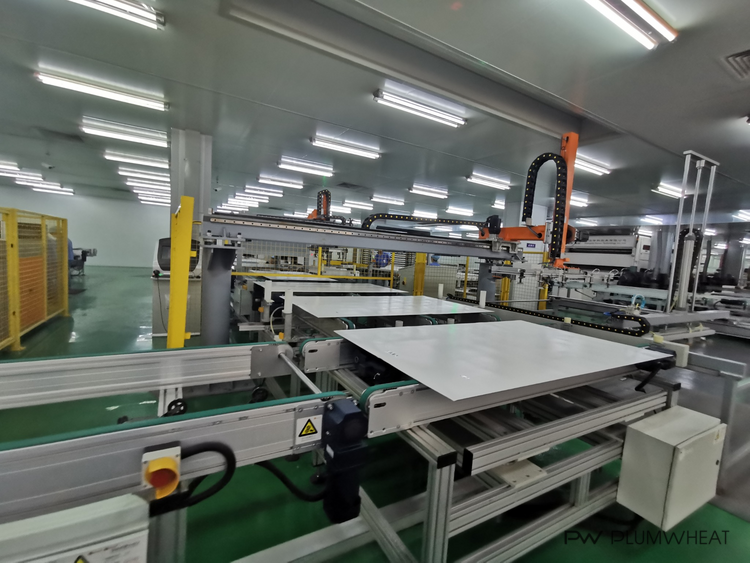
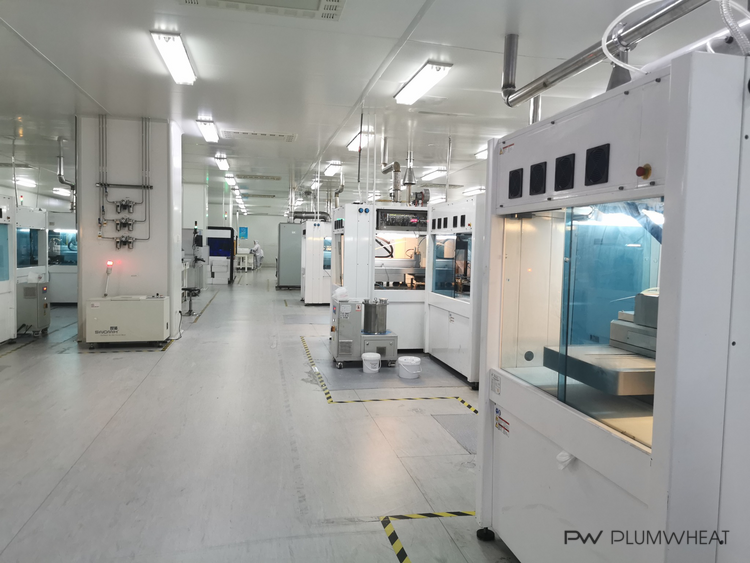
The visit showed a substantial level of automation, including enclosed machinery, guarded transfer systems and automated handling equipment. This supported the factory’s claim that it could manufacture solar cells and modules, but the existence of equipment was not treated as proof of output, yield or long-term reliability.
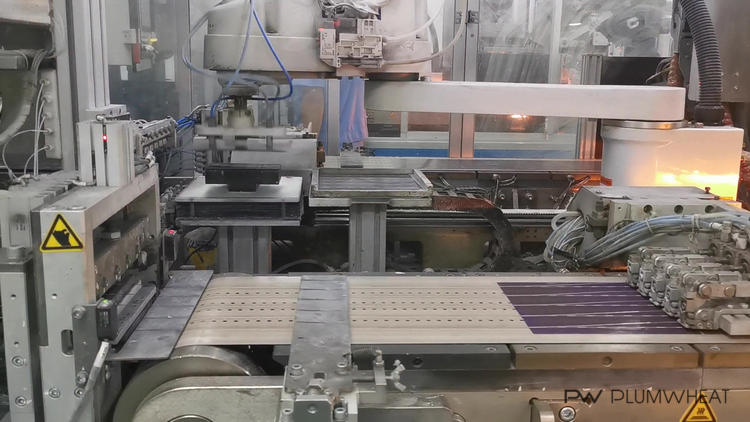
The video confirms that automated equipment was present and operating during the visit. It does not independently verify machine capacity, production yield, process settings or finished-module performance.
Reviewing Production Equipment and Working Conditions
The audit considered more than whether the factory owned modern machinery. We looked at how equipment was arranged, whether production areas appeared organised, how operators interacted with the line, and whether safety guarding and material flow were consistent with routine production.
At the time of the visit, the production environment gave us a generally positive impression. The factory had automated equipment and a structured module-production process. This observation concerns only the visited site; without presenting the other factories’ records, we do not use it to make a comparative claim.
Checking the Quality Control System
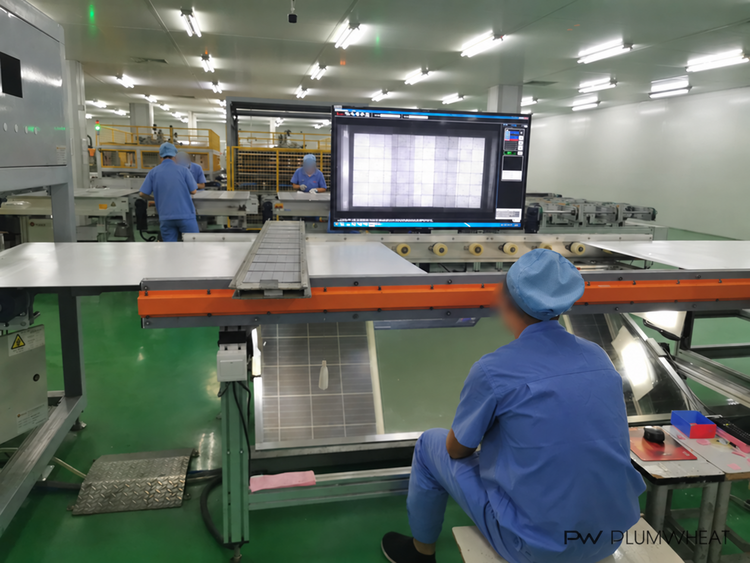
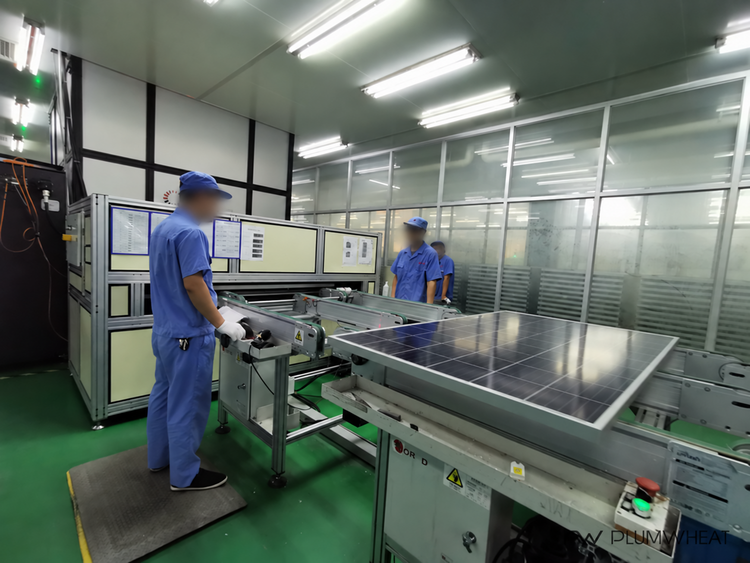
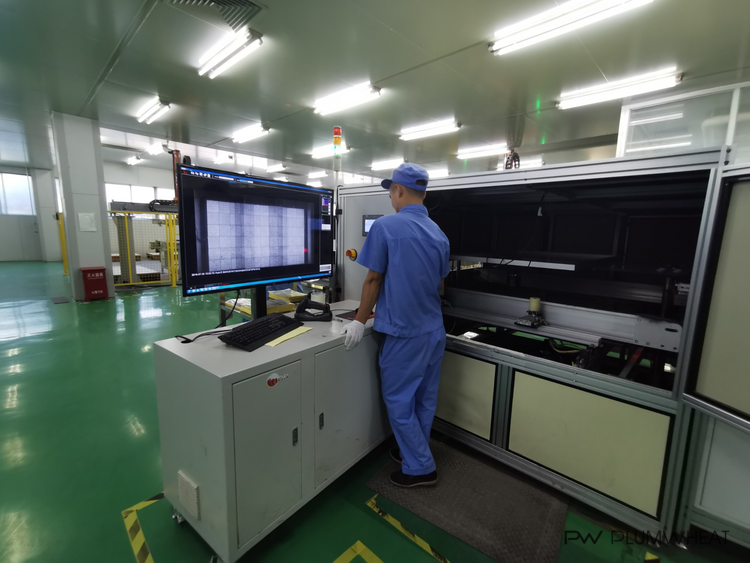
The factory presented an ISO 9001:2015 quality-management certificate and reported that it maintained a dedicated quality-control team. Its audit responses stated that modules received production-stage visual and EL checks, together with final visual and power-related testing.
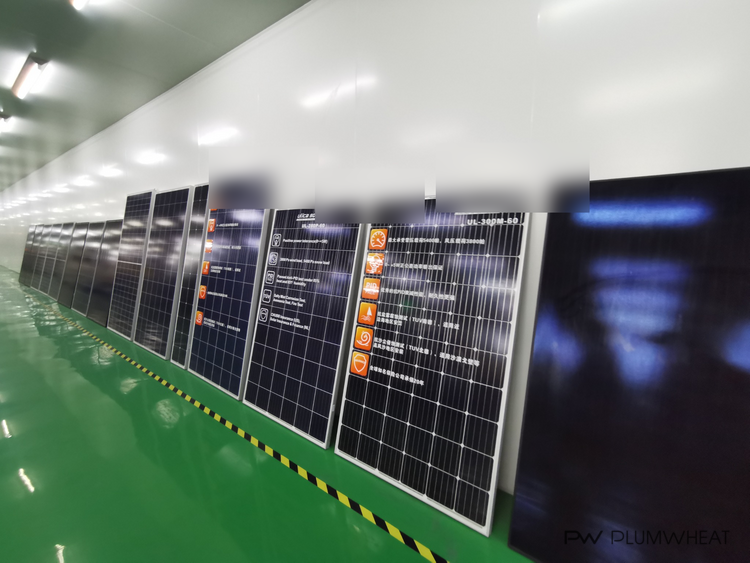
These statements were compared with the inspection and testing stations observed during the walkthrough. We could see operators reviewing module images and using dedicated equipment, but an audit still needs to distinguish between three different questions: whether equipment exists, whether a documented process exists, and whether the process is consistently followed for every order.
Reviewing Materials and Supply Continuity
Production equipment cannot keep an order on schedule if essential materials are unavailable. The supply section therefore reviewed key inputs such as backsheets, aluminium frames and tempered glass, including the reported source and lead-time status of those materials.
For an actual order, this information should be followed by confirmation of the buyer’s required bill of materials. A factory may have reliable suppliers and still use a material grade, brand or construction that does not match a particular project.
Separating Manufacturing Capability from Commercial Risk
The factory received 92 out of 100 under the scoring system used for this assignment. That was a strong result, and our overall on-site impression was positive. It did not mean that the factory was risk-free or automatically the right supplier for the buyer.
The report separately advised careful control of payment. This was not a finding that the factory had committed wrongdoing. It reflected the need to assess financial exposure and payment terms independently from machinery, certificates and production capability, particularly in a capital-intensive and commercially volatile industry.
A capable factory may still be unsuitable because of product specifications, price, delivery time, communication, minimum order requirements, payment terms or another project-specific factor. A factory audit reduces unknowns; it does not make the commercial decision for the buyer.
Why the Buyer Selected Another Factory
The buyer eventually placed the order with another one of the three candidates. We were not involved in the buyer’s final commercial decision, so we cannot state which factor determined the selection.
We later knew that another supplier had been chosen because the buyer asked us to inspect the finished goods before shipment. We therefore know the outcome, but we do not speculate about the buyer’s reasoning.
This is one of the most useful lessons from the case. A well-organised factory with credible equipment and a strong audit score may be a good choice, but it may not be the best match for every customer or every order.
What Overseas Buyers Can Learn from This Case
When several candidates are being considered, collect equivalent information from each factory before making a comparison.
Verify the legal company, physical site, production process and quality controls together.
Do not treat certificates or factory-supplied photographs as a substitute for an on-site visit.
Separate manufacturing capability, product suitability and commercial risk in the final decision.
Use the audit findings to define follow-up actions, including sample approval, production monitoring and pre-shipment inspection.
Do not assume that the highest audit score must automatically win the order.
Need a Factory Audit in China
PLUMWHEAT carries out factory audits, supplier verification, production follow-up and quality inspections for overseas buyers sourcing from China. The scope can be adapted to the product, supplier and risks that matter to your order.